I usually get up early, turn on the Weather Channel and see what's happening around the country, but Monday, Bev and I had to be somewhere at 6am and I was pretty much out of touch until mid afternoon. After watching the evening news and seeing the devestation in Joplin, Missouri on the heals of Tuscaloosa, Alabama, on the heals of Greenback, Tn., and this Joplin report was followed by shots of another erupting volcano in Iceland, I can't help but wonder.
I'm a history, geography, weather buff and as I understand it, we humans have flourished during a thousands of years long period of calmness on the earth with climate that is condusive to us. But with, what appears to be a higher level of volcanic and earthquake activity and the disasters these cause, the warming of the planet and the more serious weather and disasters this may be causing - flooding, hurricanes, tornadoes - I can't help but wonder if Mother Earth is slowly awakening from a nap. I hope not.
My heart goes out to all those who are affected by these tragedies and I can't even imagine what it must be like for all you have to be blown or washed away.
Sorry for the downer and I hope to be back to normal tomorrow.
Larry
Tuesday, May 24, 2011


Monday, May 23, 2011
New England Day 4 – No Big Plans
We talked about several options such as a drive around the area North of here, driving up Mt. Washington, going back to North Conway, etc. So we had a little breakfast, which was for me a couple of fried eggs atop some leftover fried potatoes we’d brought from WV. We also decided a Bloody Mary would be good and while I usually put horseradish, celery salt, lemon, and olives in mine, we went with what we had – they were still right good.
 So about 2:30pm, I woke Bev up from her nap, we got out of our bathrobes and walked the trail from the resort through the woods to the Saco River. After going hard for 6 days, an easy day hit the spot and got us ready for the final two days here and the long two day drive back to Almost Heaven South.
The trail, which turned out to be over a mile, wound around thru a beautiful wooded area and along the river – it’s a cross country ski trail in winter and can be even longer than we went. It’s a nice trail with many features such as a fishing pond and bear description.


 It’s also a fitness trail with workout stations along the way.
 It had a nice area for a picnic and swimming,

 So long as you didn’t stray out too far as the water out around the gravel bar was really moving. Here are a few shots of the river including a dad and kids rock hunting on the gravel bar.


 We are in Birch woodlands as shown by this pretty clump – we’ve seen some places that are all Birch – like the western Aspens.
 And for those who complain about those ugly cell towers, there is always this option - turn it into a tree.

 After the walk, we got cleaned up and went to dinner at the nearby Red Parka Pub, where we shared a bowl of good clam chowder and I had baked haddock, which was also good, and Bev had stuffed shrimp which were just okay.


 Then we went up in the mountains at dusk on a moose hunt but came back empty handed – fortunately we saw one on our way in the first night.
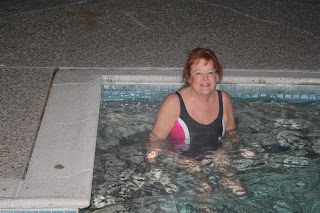
Finally, it was back to the resort and off to the hot tub – Bev’s a fan but it was way too hot for me so I drank wine while she boiled herself - I could have cooked a lobster in there.
 All photos can be enlarged by clicking on them.
Have a great day and thanks for stopping by Almost Heaven South.
One year ago: Using Up The Scallops
Larry

The trail, which turned out to be over a mile, wound around thru a beautiful wooded area and along the river – it’s a cross country ski trail in winter and can be even longer than we went. It’s a nice trail with many features such as a fishing pond and bear description.


Finally, it was back to the resort and off to the hot tub – Bev’s a fan but it was way too hot for me so I drank wine while she boiled herself - I could have cooked a lobster in there.

Have a great day and thanks for stopping by Almost Heaven South.
One year ago: Using Up The Scallops
Larry
Sunday, May 22, 2011
Our First New Potatoes & Bread Day - OMG
When I first met Bev, she introduced me to several foods, such as peas and dumplings and boiled new potatoes fried in butter. My mom often boiled small potatoes to hand mash on your plate with butter, but I’d never had them fried whole in butter.
Before I continue let’s discuss small vs. new potatoes - I think I’ve covered this before, but I believe it’s worth repeating. Small potatoes are not necessarily new potatoes and large potatoes can be new. I had a veggie customer one time who had ordered new potatoes from me but was disappointed when they were a variety of sizes up to tennis ball. When potatoes are harvested by digging up the plant, there are tubers of all sizes including some small ones and they all come out of the ground at the same time and all cure over a short period of time.
When you go into the store and there is a display of large red potatoes beside a display of small ones label “new potatoes”, they likely came out of the ground about the same time, so they're unlikely to be new - this is what confused my customer.
There are two ways to tell if it’s a new potato – first it taste different – sweeter to me as the sugar hasn’t all turned to starch. Secondly, a new potato can hardly be washed without rubbing off some of the skin – especially if brand new like these - less than 30 minutes out of the ground.
These were harvested by digging under the plant with my hand to find the right size then pulling them out and putting back the soil. This is known as graveling and doesn't disturb the plant or the other potatoes and since I grow potatoes mostly for the new ones with the better flavor, many will be harvested this way - I got one too small by mistake and the largest one was smaller than a tennis ball.
 Bev’s normal process was to boil the potatoes until tender then fry in butter to crisp the skin, but we’ve been seeing the smashed process on TV lately and had to try it. So after boiling, she smashed them down with her hand into a flatter shape, then fried them in the butter.
 After turning and noticing the extra butter in the skillet, she decided to toss in some thick slices of Vidalia onion – just bought our first ones.
 After plating she added some chopped green onion.
 I love the smashed version as it provides much more surface area to be crisped by the butter without continuous turning and the onions were a nice addition. This was my lunch for the day and it was outstanding - makes the gardening labor well worth it.
Bev baked bread this day and made a pan of pecan cinnamon rolls.
 She normally makes a glaze for them, but this time used maple butter - it's not maple flavored butter. We'd never heard of it before our stop at Bisson's Sugar House during our New England trip. What it is is pure maple syrup that has more of the water cooked out of it to make it thicker - they also have taffy which has more water cooked out to make it even thicker and we bought his last one. I wondered what we'd use it for when Bev bought it, but a new standard has been set for these babies - they were awesome.
 Wende came by for a visit and we served her this for dinner - kind of leftovers of potatoes, oysters, and smoked chicken breast - plus grilled romaine and a sweet roll.


 Pretty darn good meal for a throw together.
All photos can be enlarged by clicking on them.
Have a great day and thanks for stopping by Almost Heaven South.
One year ago: Tortellini and Italian Sausage
Larry
Before I continue let’s discuss small vs. new potatoes - I think I’ve covered this before, but I believe it’s worth repeating. Small potatoes are not necessarily new potatoes and large potatoes can be new. I had a veggie customer one time who had ordered new potatoes from me but was disappointed when they were a variety of sizes up to tennis ball. When potatoes are harvested by digging up the plant, there are tubers of all sizes including some small ones and they all come out of the ground at the same time and all cure over a short period of time.
When you go into the store and there is a display of large red potatoes beside a display of small ones label “new potatoes”, they likely came out of the ground about the same time, so they're unlikely to be new - this is what confused my customer.
There are two ways to tell if it’s a new potato – first it taste different – sweeter to me as the sugar hasn’t all turned to starch. Secondly, a new potato can hardly be washed without rubbing off some of the skin – especially if brand new like these - less than 30 minutes out of the ground.
These were harvested by digging under the plant with my hand to find the right size then pulling them out and putting back the soil. This is known as graveling and doesn't disturb the plant or the other potatoes and since I grow potatoes mostly for the new ones with the better flavor, many will be harvested this way - I got one too small by mistake and the largest one was smaller than a tennis ball.


Bev baked bread this day and made a pan of pecan cinnamon rolls.


All photos can be enlarged by clicking on them.
Have a great day and thanks for stopping by Almost Heaven South.
One year ago: Tortellini and Italian Sausage
Larry
Saturday, May 21, 2011
Maine Seafood In Tennessee
When we were buying our seafood in Portland, ME (another post coming about this in a few days), we specifically bought 2 dozen oysters to grill for our first night home - even though Bev was ready for something besides seafood she agreed to humor me. I sampled a couple when buying and found them to be much brinier than their southern cousins and according to the fish monger it’s due to the colder waters they grow in.
While there, I also bought an oyster knife and got a lesson in opening them - here's the first 8 and that's a 11"x17" jelly roll pan under the cutting board, they were big.
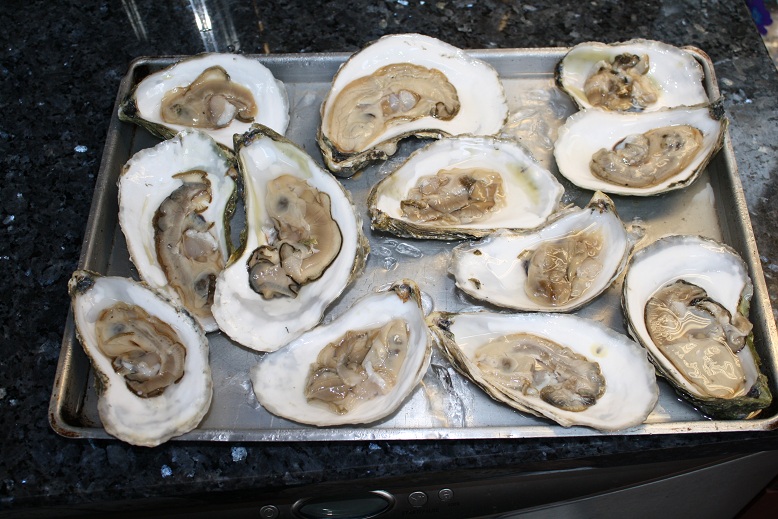
 After scrubbing them well, I opened about 17 in the time it took me to do a couple without the oyster knife – you need this tool for this job. As you can see only 12 made it to the tray for cooking – one more after the picture - and the others were for the cook. Not being used to the saltiness and knowing I was using salted butter, I gave them a quick rinse.
 I mixed up a batch of our usual garlic butter, fired up the charcoal grill, and proceeded with opening. In the meantime Bev sauteed some spinach from the garden with some garlic and parmesan and cleaned a head of romaine and a green onion – also from the garden. When open, they got topped with the garlic butter and grated parmesan or the spinach.
 I started the oysters on the charcoal grill but was too anxious and didn’t get the fire hot enough, so I moved them to the gas grill – Bev commented that the charcoal fire wasn’t hot enough to do Smores – ouch. Here they are on the gas grill. One of the keys to flavor is for the butter to bubble over, and create smoke when it hits the fire, so fill them up with it.
 When I put them on the gasser, I added the onion, and I had already wilted the romaine over the charcoal. I’ve said this previously but after eating char-grilled oysters in two famous restaurants and being served little cooked-to-death nuggets, I’ve learned to take them off after the butter boils for a couple of minutes. This way they are cooked through, but still succulent, tender, and absolutely delicious – the quick rinse worked perfectly for salt control.
Bev split the romaine and added some Caesar dressing with the chopped, grilled green onion tops and parmesan and it was also equally delicious. Here’s Bev’s plate with the first round of oysters.
 And the final part was the Italian bread dipped in the butter left in the shells. And even though Bev was fished out – she sat here talking about how good they were – and we’ve got 7-8 more for tomorrow.
All photos can be enlarged by clicking on them.
Have a great day and thanks for stopping by Almost Heaven South.
One year ago: A Short Road Trip To Oak Ridge
Larry
While there, I also bought an oyster knife and got a lesson in opening them - here's the first 8 and that's a 11"x17" jelly roll pan under the cutting board, they were big.



Bev split the romaine and added some Caesar dressing with the chopped, grilled green onion tops and parmesan and it was also equally delicious. Here’s Bev’s plate with the first round of oysters.

All photos can be enlarged by clicking on them.
Have a great day and thanks for stopping by Almost Heaven South.
One year ago: A Short Road Trip To Oak Ridge
Larry
Friday, May 20, 2011
New England Day 3 – North Of Portland ME
While the weather was a little a cool and misty for this morning, it turned out to be a beautiful day. I wanted to spend two days (at least) on the coast – one to North of Portland and one to South. So this first day we headed east and just outside of Portland we went north over to the coast and our first drive was on South Freeport Rd, which was through a nice residential area, but we rarely saw the water. In my first post about our trip, I complained about the road condition and as it turns out, now they were repairing and delaying traffic on what seemed like every road we were on - guess they don't have much time.
We came to a road sign for the Freeport Town Wharf and headed down it to find this.


 And since there was a little restaurant with what appeared to be local customers and we were both ready for lunch we gave it a try. The interesting thing is that it was on a list of places to eat in New England given to us by Big Daddy Dave before we left home, and we just stumbled upon it.
 We figured there was no way to get fresher seafood and turns out, they have there own lobstering boats. After looking at the extensive menu for fried foods, we were told the boiled food was around the corner and it included lobster.
 Since I hadn’t had my daily lobster yet, around the corner we went to study this menu.
 One of the requirements for this vacation was to eat a whole, fresh lobster from a little dive, on the water, where the locals eat, so this was another no brainer. We ordered a 1¾ lb lobster and they cooked it in boiling water with no added seasoning, and we added a bowl each of lobster bisque and clam chowder. Here’s the lobster and bisque and for $13.99/lb, you get only the lobster, a cup of melted butter, and a claw cracker – they’re only $6.99/lb if you take them home and cook yourself.
 We didn’t care for either of the soups, which shocked me, and we shared the lobster, after I got it all over me taking it apart. I ate the tail and a claw and Bev ate a bite of tail, a claw, and the knuckles. I liked all parts, but Bev definitely prefers the claw and arm meat. Another surprise was that we left a little hungry as there is not a lot of meat in a lobster this size, especially considering the cost.
Bev has never been a lobster fan and now that I’ve eaten the best, and while I enjoyed it, I can honestly say I like other seafood better – which will help my wallet. But we still have a lobster roll as well as fried whole clams to try.
We left the restaurant and headed up coast, but couldn’t get very close to the water and when we did, it was at a marina in some back bay – we’ll change that when we go south of Portland. I did like the location of the house on the left.
 We did pass this old grist mill – wheel long gone – and the river that ran it.

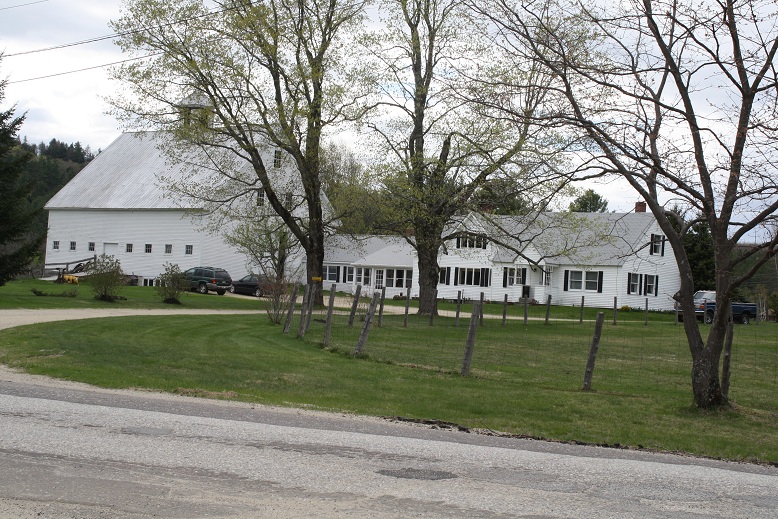
 One the way back we shot a couple of farm houses which nearly always have a big barn and it’s connected to the house. It makes sense to me as the livestock had to spend most of the winter in the barn and the farmer had to be able to reach the barn regardless of the weather.

 I didn't take any shots but after seeing so many dandelions - whole fields full - Bev and I wondered if they were the state flower of ME. or NH, but they were not. While I try to keep them from my lawn, the fields of yellow were very pretty and reminded me again of the God/ St. Francis conversation on the topic.
After watching the weather this week, looks like we were there the perfect week - they've had lot's of rain all week.
All photos can be enlarged by clicking on them.
Welcome new followers - I now have 79 more than I ever expected and I apprecite your reading. Have a great day and thanks for stopping by Almost Heaven South.
One year ago: Cajun Seafood At Almost Heaven South
Larry
We came to a road sign for the Freeport Town Wharf and headed down it to find this.


Bev has never been a lobster fan and now that I’ve eaten the best, and while I enjoyed it, I can honestly say I like other seafood better – which will help my wallet. But we still have a lobster roll as well as fried whole clams to try.
We left the restaurant and headed up coast, but couldn’t get very close to the water and when we did, it was at a marina in some back bay – we’ll change that when we go south of Portland. I did like the location of the house on the left.


After watching the weather this week, looks like we were there the perfect week - they've had lot's of rain all week.
All photos can be enlarged by clicking on them.
Welcome new followers - I now have 79 more than I ever expected and I apprecite your reading. Have a great day and thanks for stopping by Almost Heaven South.
One year ago: Cajun Seafood At Almost Heaven South
Larry
Thursday, May 19, 2011
Gardening Thursday – Protecting Your Plants, Part 1
To keep this from being so long, I’ve broken it into a general discussion and spring plants for this week and summer plants for next week and I’ll cover both diseases (Ds) and pests (Ps) in both - but it's still kind of long.
One of the worst gardening feelings is seeing my hard work go down the tubes at the hands of Ps or Ds. Since different parts of the country have different issues, once again, I’ll have to stick with my area. I try to be as organic as I can but I live in one of the country’s worst areas for both disease and pests – Zone 7, the transition zone, where hot moist weather provides a great environment for the nasty’s. Therefore, I do what I need to do to ensure a good return on my time and money investment.
Generally pests can be controlled by prevention, mechanical or chemical means and diseases by prevention and chemicals. By mechanical, I mean covers, traps, companion planting, etc. and chemical can either be organic or non and prevention means taking the necessary steps to prevent plant infection by the Ds.
My approach is to use a combination of all of these and often on the same plants – for example mulching, staking, and keeping the leaves dry on tomatoes plus removing infected leaves and spraying with a fungicide for disease prevention and practicing crop rotation.
When using any chemicals it is critical to read and follow the directions and use those that will deal with the pest and are okay for the plant. Around my area, Sevin (carbaryl is the generic name) is the universal pesticide but it is not effective on all pests and should not be used under certain conditions – so again read the label.
For the spring plants, spinach, asparagus, radishes (maybe flea beetles), onions, and peas have very few problems so I do nothing to protect them - although I may see some beetles on the asparagus later on and use a chemical to get rid of them.
Other spring plants are not as fortunate – Brassica’s (cabbage, broccoli, kale, etc), lettuce, other greens, and potatoes for example.
The main problem for the brassicas is cabbage looper worms – the inch or so long ones about the color of cabbage. I find the best way to deal with them is floating row covers which is a light weight spun fabric that let’s water and sun through, but stops the little white egg laying moths you see flitting above these plants - one source is Gardens Alive, but I get mine locally. Row covers can be used for any plant that does not require bee pollination to make a crop. The covers need to be put on as soon as the plants go in the ground to be sure it’s early enough, but if you’re late like I was this year, the plants can be sprayed with the organic Bacillus Thuringiensis - Bt or a chemical fertilizer as if the covers were not being used. This is the result of being late.
 The covers can just lay on the plants (floating), but I like to use half-moon hoops made from wire I had left over from a drop ceiling installation – I can see and pick the plants better. The cover needs to be pretty tight to the ground and I smooth the soil with a narrow leaf rake to aid in this. I anchor it with 3” long U’s at each hoop made from the same wire.


 The main problem for lettuce is snails and slugs and they can be dealt with by trapping, such as in beer cups, where they drown, spreading Diatomacious earth (ground up fish skeletons), which they won’t cross, or bait which is very effective but must be used carefully as dogs will eat it and it can be fatal.
Greens can have the same issues as the brassicas plus flea beetles which leave tiny holes all over the leaves. They are unsightly but rarely fatal (except on small eggplants) once the plants have lots of leaves - I control them with chemicals or don't worry about them.
While wire worms may occasionally eat into my tubers and flea beetles like the leaves, by far the bigger concern is the tenacious and voracious Colorado potato beetle – the larva can strip a plant of leaves overnight. While I’ve not tried it yet, floating row covers might work so long as the beetles don’t emerge from the ground under the covers – a good reason for crop rotation - and while potatoes do bloom, pollination is not required. I use the chemicals listed for them and rotate the types to prevent immunity development by the beetles. Potatoes may also get some Ds such as the same blights that infect tomatoes which are controlled with fungicides (potatoes, tomatoes, peppers, and eggplant are all in the nightshade family).
Here's the menu for the publications dealing with Ds and Ps in the home garden, including trees, schrubs and lawns - a real wealth of info - from University Of Tennessee Extension. Since I'm dealing specifically with Ps and Ds control in the vegetable garden, here are the specific manuals for them:
Disease Manual - the back of this manual has controls by crop by pest.
Pest manual - the back of this manual has controls by by crop by pest.
Then there are also many specific manuals such as these for the Colorado potato beetle and tomato wilt problems.
One source for organic products is Gardens Alive.
The Extension manuals cover most common garden pests and diseases, but your State Extension Service will have them for issues specific to your area. If you do any type of gardening or landscapping, I strongly urge you to get familiar with the available publications for your state extension service - learning about their existence may be the most important thing I got from my Master Gardener training and the most important thing you'll get from my blog.
All photos can be enlarged by clicking on them.
Have a great day and thanks for stopping by Almost Heaven South.
One year ago: Asparagus and Fried Grits
Larry
One of the worst gardening feelings is seeing my hard work go down the tubes at the hands of Ps or Ds. Since different parts of the country have different issues, once again, I’ll have to stick with my area. I try to be as organic as I can but I live in one of the country’s worst areas for both disease and pests – Zone 7, the transition zone, where hot moist weather provides a great environment for the nasty’s. Therefore, I do what I need to do to ensure a good return on my time and money investment.
Generally pests can be controlled by prevention, mechanical or chemical means and diseases by prevention and chemicals. By mechanical, I mean covers, traps, companion planting, etc. and chemical can either be organic or non and prevention means taking the necessary steps to prevent plant infection by the Ds.
My approach is to use a combination of all of these and often on the same plants – for example mulching, staking, and keeping the leaves dry on tomatoes plus removing infected leaves and spraying with a fungicide for disease prevention and practicing crop rotation.
When using any chemicals it is critical to read and follow the directions and use those that will deal with the pest and are okay for the plant. Around my area, Sevin (carbaryl is the generic name) is the universal pesticide but it is not effective on all pests and should not be used under certain conditions – so again read the label.
For the spring plants, spinach, asparagus, radishes (maybe flea beetles), onions, and peas have very few problems so I do nothing to protect them - although I may see some beetles on the asparagus later on and use a chemical to get rid of them.
Other spring plants are not as fortunate – Brassica’s (cabbage, broccoli, kale, etc), lettuce, other greens, and potatoes for example.
The main problem for the brassicas is cabbage looper worms – the inch or so long ones about the color of cabbage. I find the best way to deal with them is floating row covers which is a light weight spun fabric that let’s water and sun through, but stops the little white egg laying moths you see flitting above these plants - one source is Gardens Alive, but I get mine locally. Row covers can be used for any plant that does not require bee pollination to make a crop. The covers need to be put on as soon as the plants go in the ground to be sure it’s early enough, but if you’re late like I was this year, the plants can be sprayed with the organic Bacillus Thuringiensis - Bt or a chemical fertilizer as if the covers were not being used. This is the result of being late.


Greens can have the same issues as the brassicas plus flea beetles which leave tiny holes all over the leaves. They are unsightly but rarely fatal (except on small eggplants) once the plants have lots of leaves - I control them with chemicals or don't worry about them.
While wire worms may occasionally eat into my tubers and flea beetles like the leaves, by far the bigger concern is the tenacious and voracious Colorado potato beetle – the larva can strip a plant of leaves overnight. While I’ve not tried it yet, floating row covers might work so long as the beetles don’t emerge from the ground under the covers – a good reason for crop rotation - and while potatoes do bloom, pollination is not required. I use the chemicals listed for them and rotate the types to prevent immunity development by the beetles. Potatoes may also get some Ds such as the same blights that infect tomatoes which are controlled with fungicides (potatoes, tomatoes, peppers, and eggplant are all in the nightshade family).
Here's the menu for the publications dealing with Ds and Ps in the home garden, including trees, schrubs and lawns - a real wealth of info - from University Of Tennessee Extension. Since I'm dealing specifically with Ps and Ds control in the vegetable garden, here are the specific manuals for them:
Disease Manual - the back of this manual has controls by crop by pest.
Pest manual - the back of this manual has controls by by crop by pest.
Then there are also many specific manuals such as these for the Colorado potato beetle and tomato wilt problems.
One source for organic products is Gardens Alive.
The Extension manuals cover most common garden pests and diseases, but your State Extension Service will have them for issues specific to your area. If you do any type of gardening or landscapping, I strongly urge you to get familiar with the available publications for your state extension service - learning about their existence may be the most important thing I got from my Master Gardener training and the most important thing you'll get from my blog.
All photos can be enlarged by clicking on them.
Have a great day and thanks for stopping by Almost Heaven South.
One year ago: Asparagus and Fried Grits
Larry
Subscribe to:
Posts (Atom)